Original text in Chinese below.
English translated by: Promise Xu, SHEN Wei
The theme of the 5th Mulan International Film Festival is Pò (in Chinese, “破”)—a Chinese character that means destruction, ruin, and the fall of a nation (“国破山河在”); but also breakthrough, groundbreaking, shattering barriers, and the idea that there can be no creation without destruction (“不破不立”).
Pò can also imply daybreak (“破晓”).
Stanley Kubrick’s 2001: A Space Odyssey is a groundbreaking masterpiece in film history. The film’s opening chapter, titled The Dawn of Man, depicts the life of a group of prehistoric apes—“Dawn” represents daybreak, and also the apes’ breaking ignorance to become enlightened.
The apes live and forage on a barren, desolate land. On what seems like an ordinary day, a monumental, smooth, and mysterious black monolith suddenly appears before them, while an enigmatic celestial event is happening above in the sky. These seem to deliver a profound revelation to the apes—one of them suddenly discovers that by wielding a large bone as a club, it can easily smash other bones. It realizes that this club can be used to fight, to gain power, and to get food. This is the manifestation of Pò: Pò as in destroying other bones but also in breakthrough—an ape has learned to use a tool.
The large bone, thrown into the air, spins and falls to “become” a spaceship, fast-forwarding the timeline of humanity to the space age. The mysterious black monolith continues to appear in different scenes: on the moon’s surface, in outer space, and in the surreal room at the end of the film. The unnamed object, in each appearance, seems to quietly accompany or lead to significant breakthroughs in human civilization. In the final scene, a glowing orb containing a fetus emerges from the surreal room and approaches the Earth from space. Kubrick offers no clear endgame for humanity or any explanation on the black monolith, but I believe that this mysterious orb will break open, the infant will come out, and some revolutionary breakthroughs will occur.
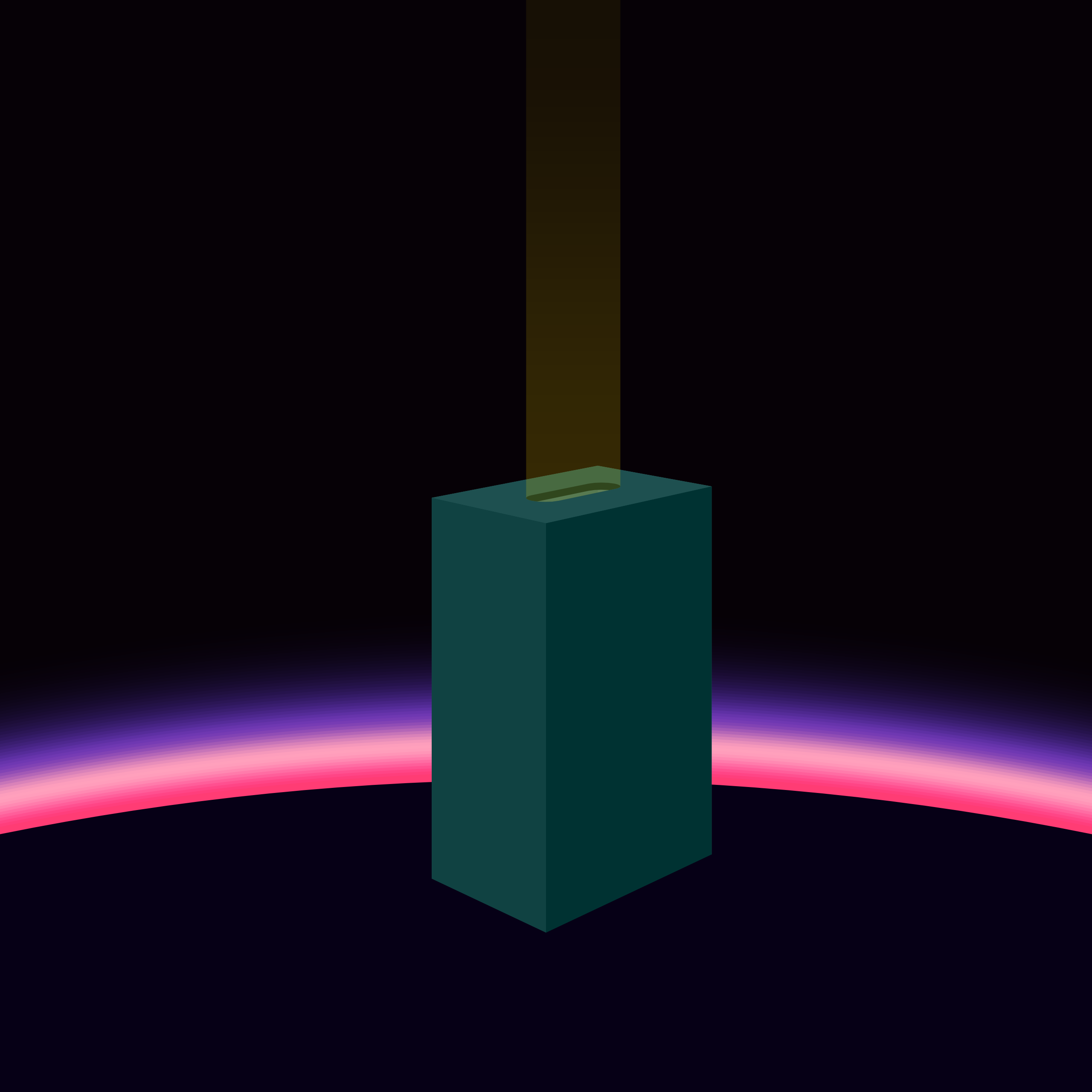
The main visual for this year’s MulanIFF draws inspiration from 2001: A Space Odyssey, depicting an apple box from a high altitude at daybreak. I first encountered apple boxes while working on a short film. They are used to prop up set furniture and light stands, level dolly tracks, or serve as makeshift seats or workbenches. Scattered around the set, they appear to be dirty, heavy, and rough enough to cause splinters. However, when actually handling them, I found them to be quite clean, lightweight, and rather smooth, so I grew very fond of them. They are extremely ordinary and simple, but highly useful.
Unlike the camera, the slate, or the director’s chair, the apple box is not a widely recognized object that symbolizes film shoots—in fact, for people who have never been on a film set, apple boxes might just be objects with no clear purpose. Thus, to me, the apple box can become a secret signal among filmmakers.
In the main visual, the apple box replaces the black monolith from 2001: A Space Odyssey. Both are at the same time familiar yet strange—they have simple geometric structures, but their true materials and actual purposes are a mystery. The presence of the apple box is the testimony of a film shoot. I think the art of film also quietly accompanies or drives the breakthroughs of human civilization.
The exploration of the starry sky is an eternal theme. “(The origin of) Humanity began in gazing at the stars,” ZHU Yilan said. “Early humans, through their observations, recordings, and imagination of the starry sky, projected and imbued human will onto natural objects, thereby externalizing subjective experiences. The starry sky, as an Otherness, then gazed back at humanity. From this, self-consciousness emerged, and human civilization began as we created and started to use symbols. Time and space were thus given signifiers, and technology, literature, and art came into being accordingly.” Facing the seemingly chaotic and disorderly starry sky, our ancestors, with astonishing imagination, endowed them with meanings, and embarked on the long journey of exploring humanity and beauty. It is this imagination that serves as the bridge connecting audiences and filmmakers who come to MulanIFF.
第五届木兰国际电影节的主题是“破”——是破坏、破灭、国破山河在的破,也是打破、突破、不破不立的破。
“破”还是破晓的破。
库布里克(Stanley Kubrick)的《2001:太空漫游》(2001: A Space Odyssey)是影史上的一部极具突破性意义的杰作。电影的开篇题为“The Dawn of Man”,描绘了一群远古时期的类人猿的生活——“Dawn”是黎明,是破晓,也是类人猿破开混沌无明、生出智慧的伊始。
类人猿在贫瘠荒凉的土地上生活、觅食。在看似平平无奇的一天,它们面前陡然出现了一个巨大、光滑、神秘的黑色方碑,而在它们的头顶之上,某个蹊跷的天体事件也正在发生。这一切似乎给了类人猿一记灵魂重锤——它们中的一只忽然发现可以通过挥舞大骨棒来轻松敲碎其他骨头。它意识到,挥舞这根骨棒,能打架,能变强,能换来食物。这是“破”的呈现:既是打破骨头的破,也是突破的破——类人猿学会使用工具了。
被抛至空中的大骨棒落下时演变成了一艘宇宙飞船,人类发展的时间线已快进至太空时代。同样的神秘黑色方碑继续在不同场景出现:月球表面、外太空、电影末尾的怪诞房间……这未命名之物的每一次出现,似乎都默默伴随或指引着人类文明的一次次突破。电影的最后一幕,一个散发着蓝色幽光、包裹着一个婴儿的球体从怪诞房间出发,从太空中不断接近地球。库布里克既没有给出人类的结局也没有给出任何关于黑色方碑的答案,但我相信这个神秘球体会破、婴儿会从中出来,而颠覆性的某种突破将会降临。
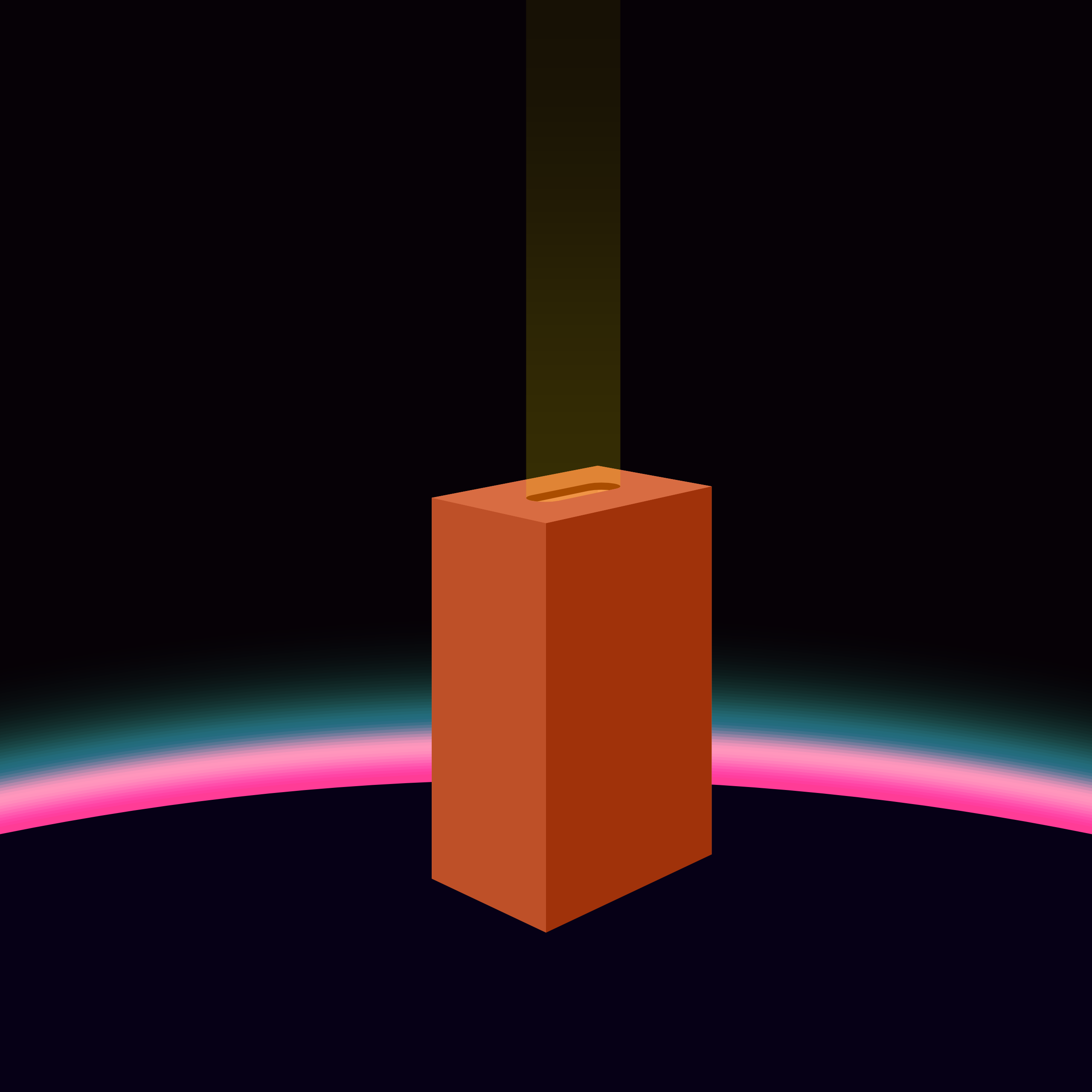
今年木兰的主视觉正是以《2001:太空漫游》为灵感的起点,从破晓时分的高空视角展现了一个苹果箱(apple box)。我第一次接触苹果箱是参与一部短片的拍摄。它们可以用来垫高置景家具、道具或灯架,平衡移动摄影机轨道,或作为临时凳子、工作台等等。它们散落在片场的四处,看起来很脏、很重,粗糙得会刮破手。但在实际搬它们的时候,我发现它们其实挺干净、不重,也蛮光滑的——于是我对它们产生了很大的好感。它们极其普通、简单,但非常好用。
不同于摄影机、场记板或导演椅,苹果箱不是为大众所熟知的能代表电影拍摄的物件——实际上对于没有进过片场的人而言,它们可能就是用途不明的箱子。因此在我看来,苹果箱能成为一个电影人之间的暗语。
在主视觉中,苹果箱代替了《2001:太空漫游》中的黑色方碑。两者都看起来既熟悉又陌生——它们有着简单的几何形构造,但实际材质和用途却可能是一个迷。苹果箱的出现暗示了电影拍摄片场的蛛丝马迹。我想,电影艺术也在默默伴随或推动着人类文明的前进吧!
对星空的探索是一个永恒的话题。“人类(的起源)是从仰望星空开始的。”朱亦蓝说,“人类初民通过对星空的观察、记录和想象,将自然客体寄托和赋予了人的意志,从而又将主观体验客体化于自身之外,反由星空这个客体凝视回自身。人类的自我意识由此产生,人类文明从初民创造并使用符号起开始计时。时间和空间被赋予标记,科技、文学、艺术应运降生。”面对漆黑夜晚中看似没有秩序与规律可言的繁星,我们的祖先赋之予意义,以惊人的想象力开始了文明和美的漫漫之途。想象力正是连接来到木兰的电影人和观众的桥梁。