My best friend, film director and writer SHEN Wei wrote a short story years ago, imagining a sci-fi world in which people—voluntarily or otherwise—abandon their physical lives. Instead, their brains and bodies are permanently linked to a network of computer systems, existing entirely in a virtual space where every sense is simulated. Remarkably, this concept predates today’s widespread fascination with the “metaverse.”
When I first read SHEN Wei’s story, I immediately thought of Wanda Koop’s Face Time series. This provocative body of work depicts human faces connected, not to bodies, but to a tangle of cables. The faces are android-like and genderless, yet they radiate profound emotion, hinting at a deeply human presence.
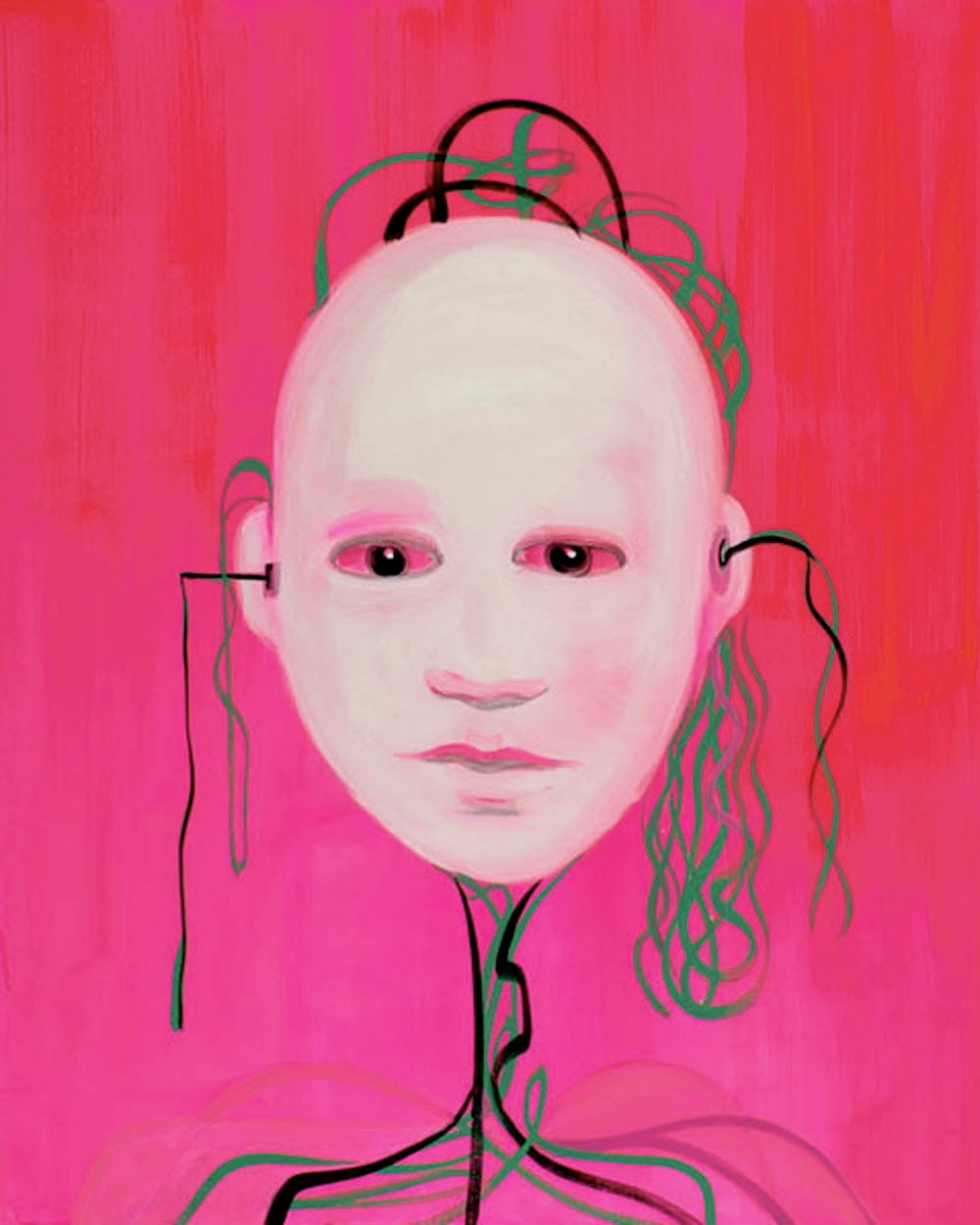
Face Time #14, 2013
Acrylic on canvas, 60 x 48 in
Ben Mio Collection
These are not necessarily sci-fi portraits. Wanda painted them around the time when smartphones and other portable devices fused with us, becoming an indispensable part of our lives. Each painting seems to narrate a unique story about an individual’s experience, yet together they convey the unmistakable universality of this techno-anthropological entanglement.
“I don’t see them as portraits of the future or the past; they are very much about now,” Wanda remarked. Nearly a decade later, these works feel more relevant than ever. Some suggest that the metaverse represents a potential trajectory for humanity—a moment, as Shaan Puri puts it, “where our digital life is worth more to us than our physical life.” With advances in AR, VR, and brain–machine interfaces, we may indeed be witnessing that evolution in real time, right now.
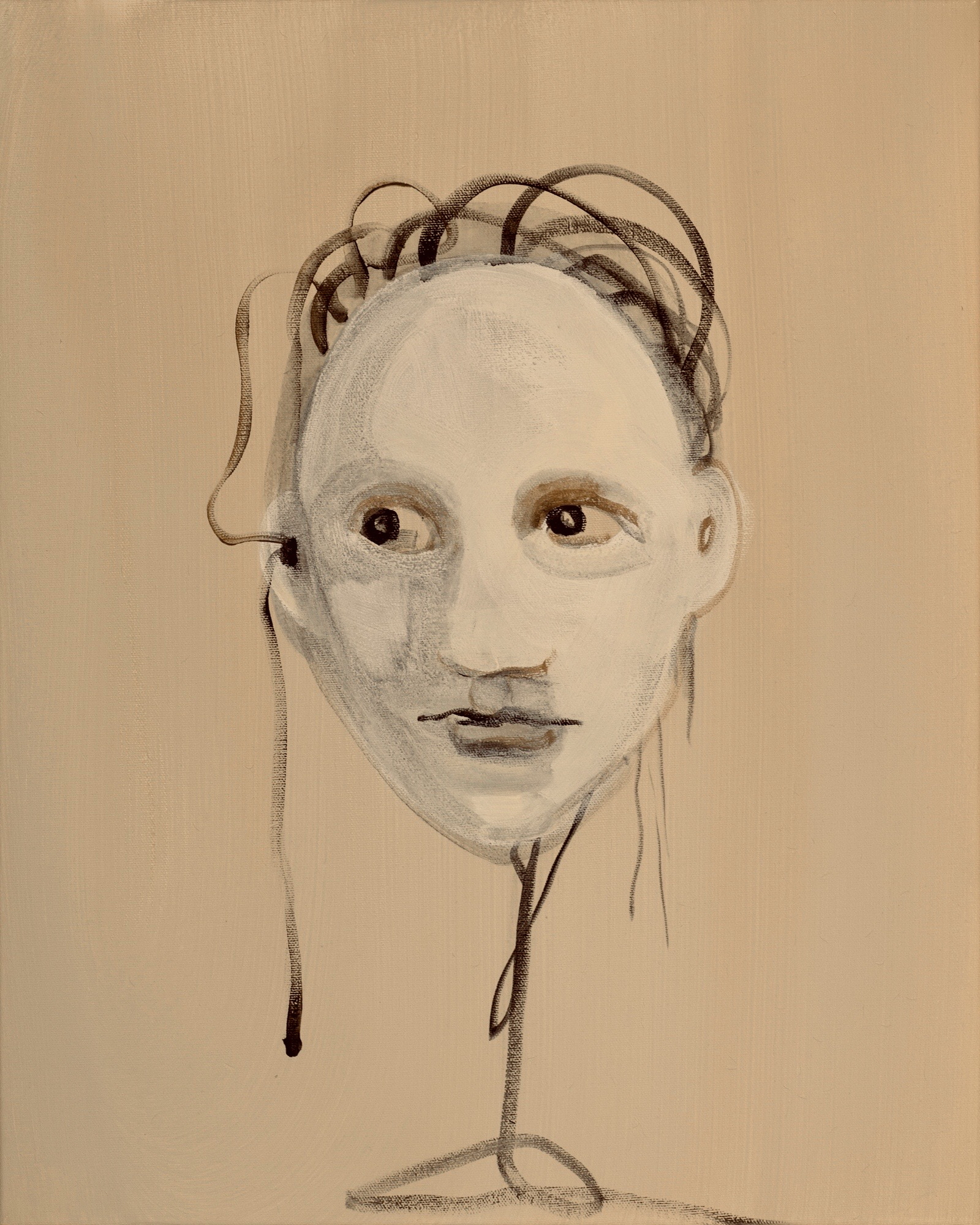
Face Time #14, 2012
Acrylic on canvas, 20 x 16 in
Ben Mio Collection