The beginning of September marks the start of another art season in New York, and undoubtedly at the forefront of my anticipation is Magnetic Field, a solo exhibition of the much-beloved Canadian artist Wanda Koop, presented by Arsenal Contemporary and Night Gallery.
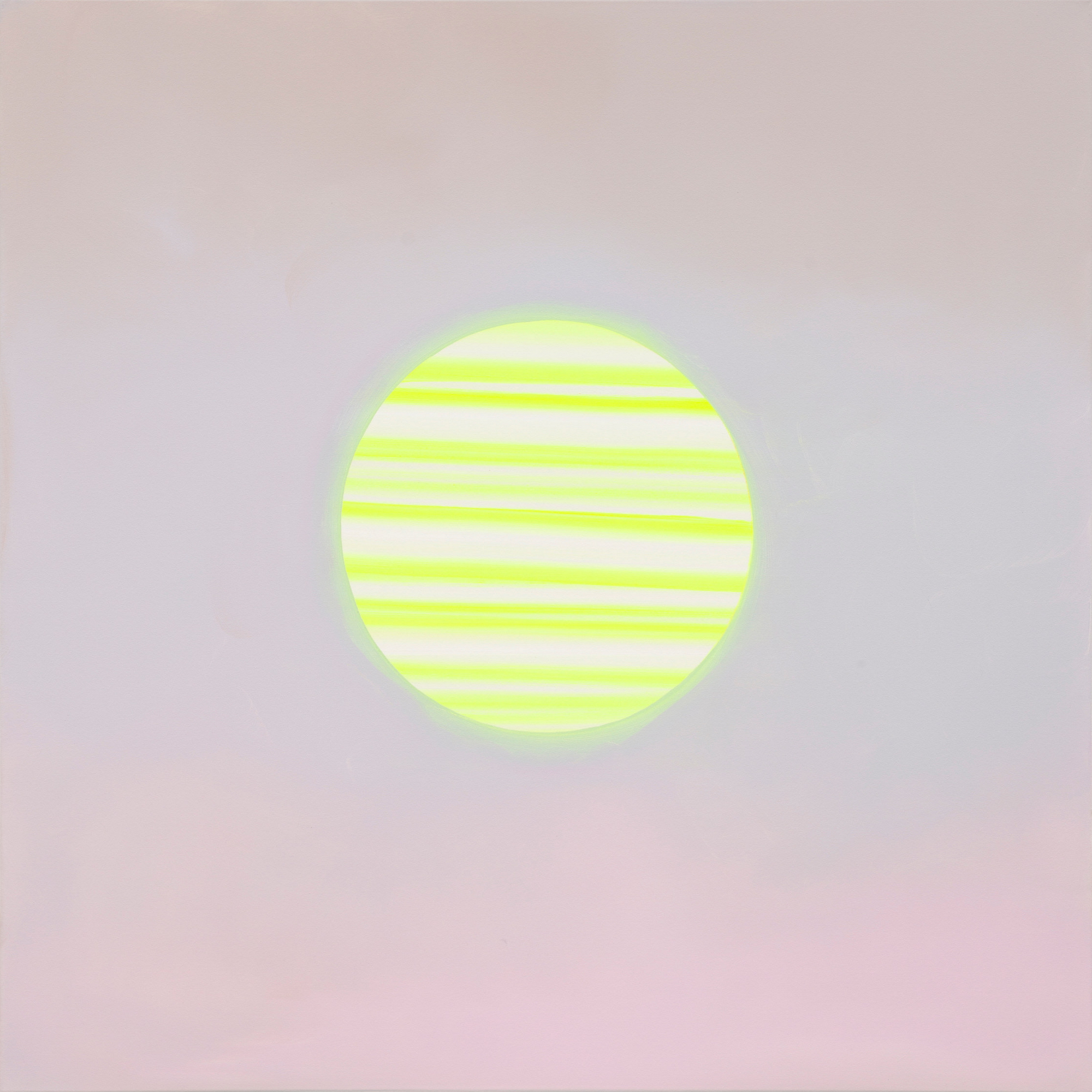
Moonwalk #10, 2024
Acrylic on canvas, 48 x 48 in
The first painting of the exhibition is Moonwalk #10 (2024). Striking fluorescent yellow bands form the moon, as if frequencies themselves were made visible, evoking the pulsing sensation of a rolling shutter scanning an ultra-bright light. While “moon” in the title could refer to ours—or any moon—it strikes me as closer in spirit to the arresting beauty of Jupiter, or perhaps some unknown celestial body. It resonates with the enigmatic imagery of the large painting in the next room, Untethered – Pale Blue (2025), and they poignantly recall the visual puzzles posed by Stanley Kubrick’s 1968 film 2001: A Space Odyssey.
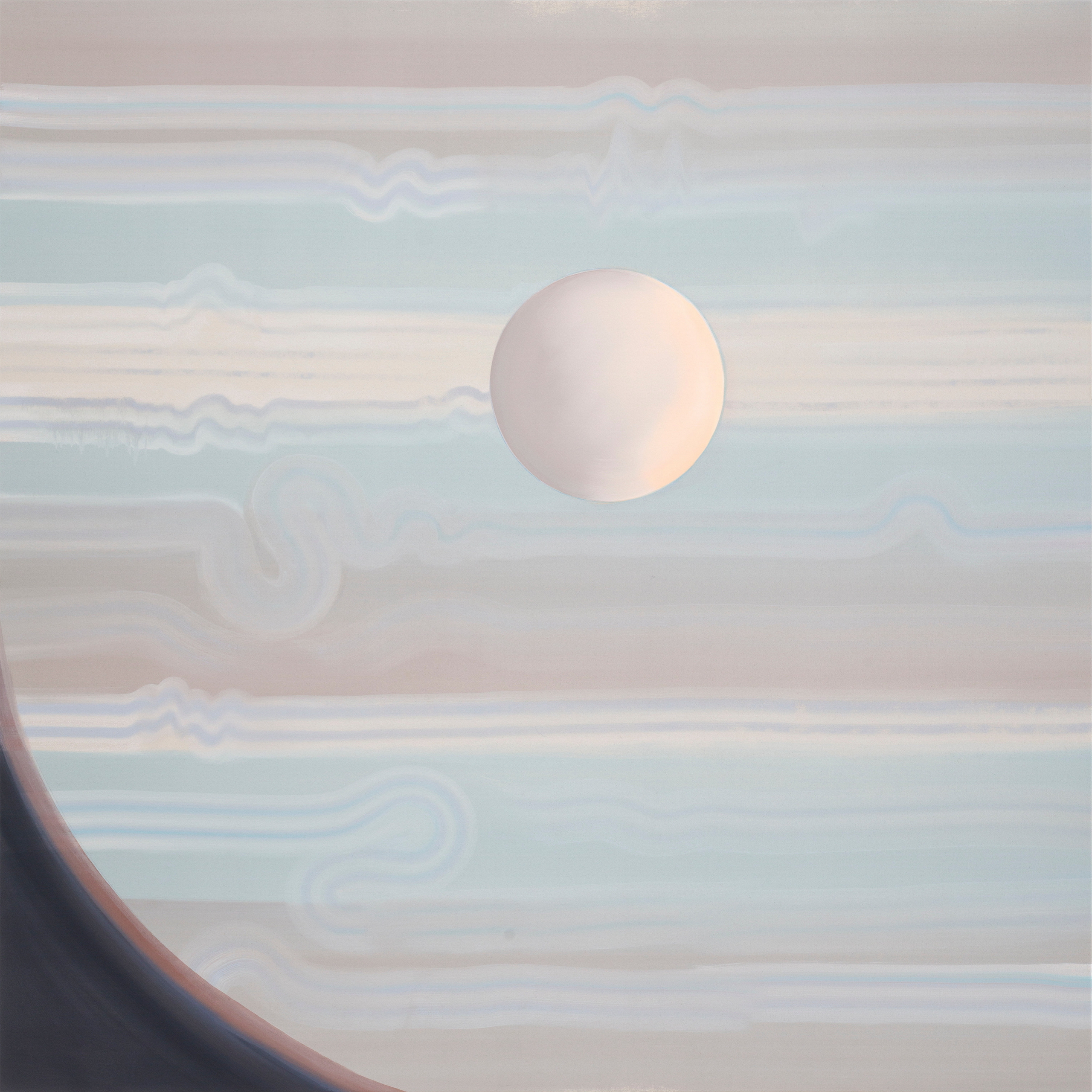
Untethered – Pale Blue, 2025
Acrylic on canvas, 84 x 84 in
Wanda has long explored the cosmos through her distinctive visual language, which serendipitously circles back to a Cosmistic sensibility: painting as a medium that entwines human perception, technological anxieties, and cosmic mystery into a single luminous field. Cosmism, which originated in Russia in the 1880s, later inspired thinkers and artists across the 20th century—this brings to mind a Soviet artistic giant and one of cinema’s greatest filmmakers, Andrei Tarkovsky, and his film Solaris (1972). Though the exhibition and the film are not connected by intention, I discovered a subtle dialogue between them, transcending time and space.
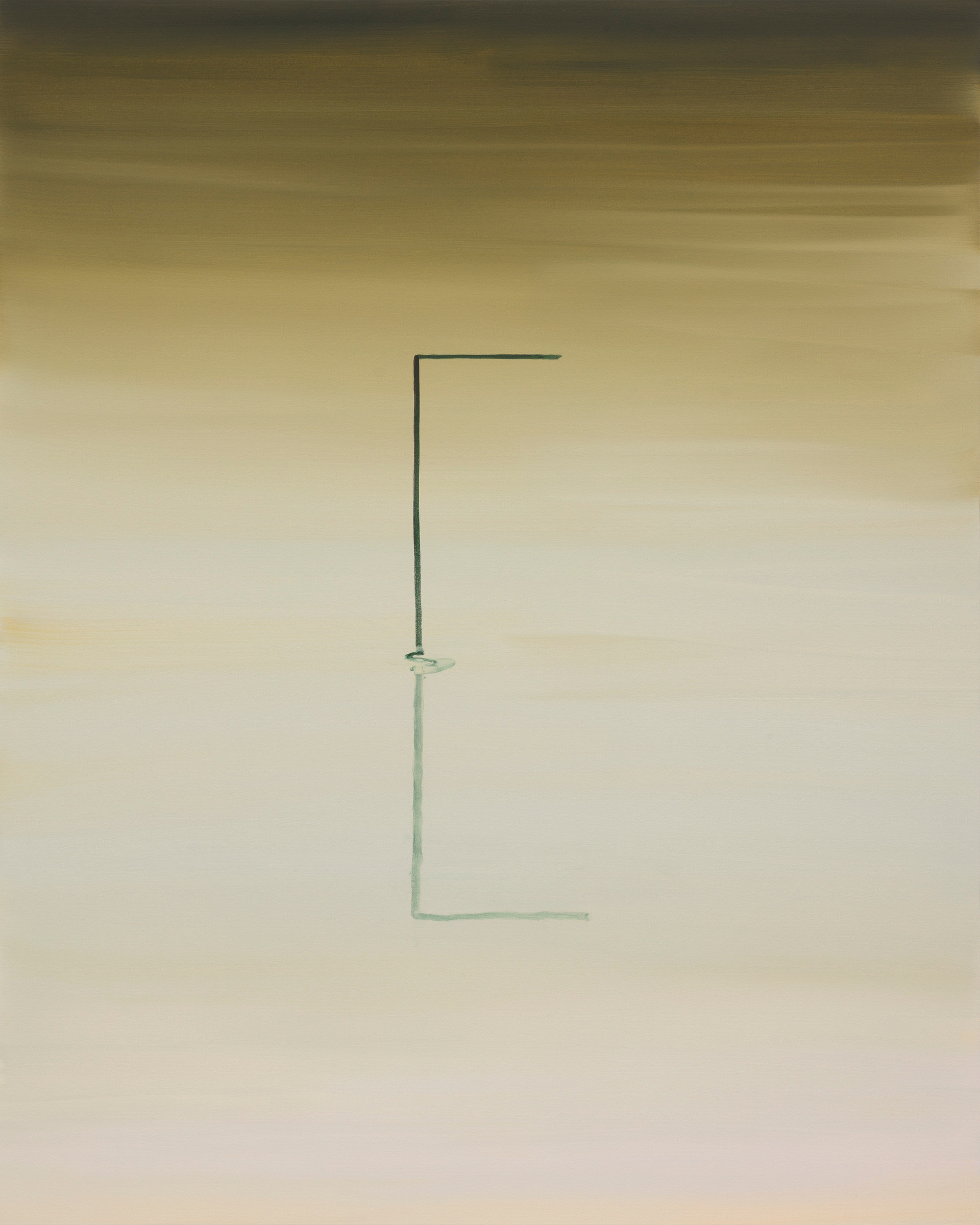
Reed – E, 2024
Acrylic on canvas, 60 x 48 in
Solaris opens with a slow-moving river, reeds swaying gently in the current, its surface shimmering with reflections of sky and light. Water, a central element of the film, mirrors the world while constantly distorting it, evoking the fluid, elusive nature of memory and experience, where perception, emotion, and time leave their traces. Curiously, in this exhibition, Wanda presents three recent Reed paintings that perfectly echo this quiet, contemplative rhythm. Here, lines are pared to their utmost simplicity, yet pulse with profound expressiveness, drawing me irresistibly into the delicate interplay of presence and absence, of the self and its reflection.
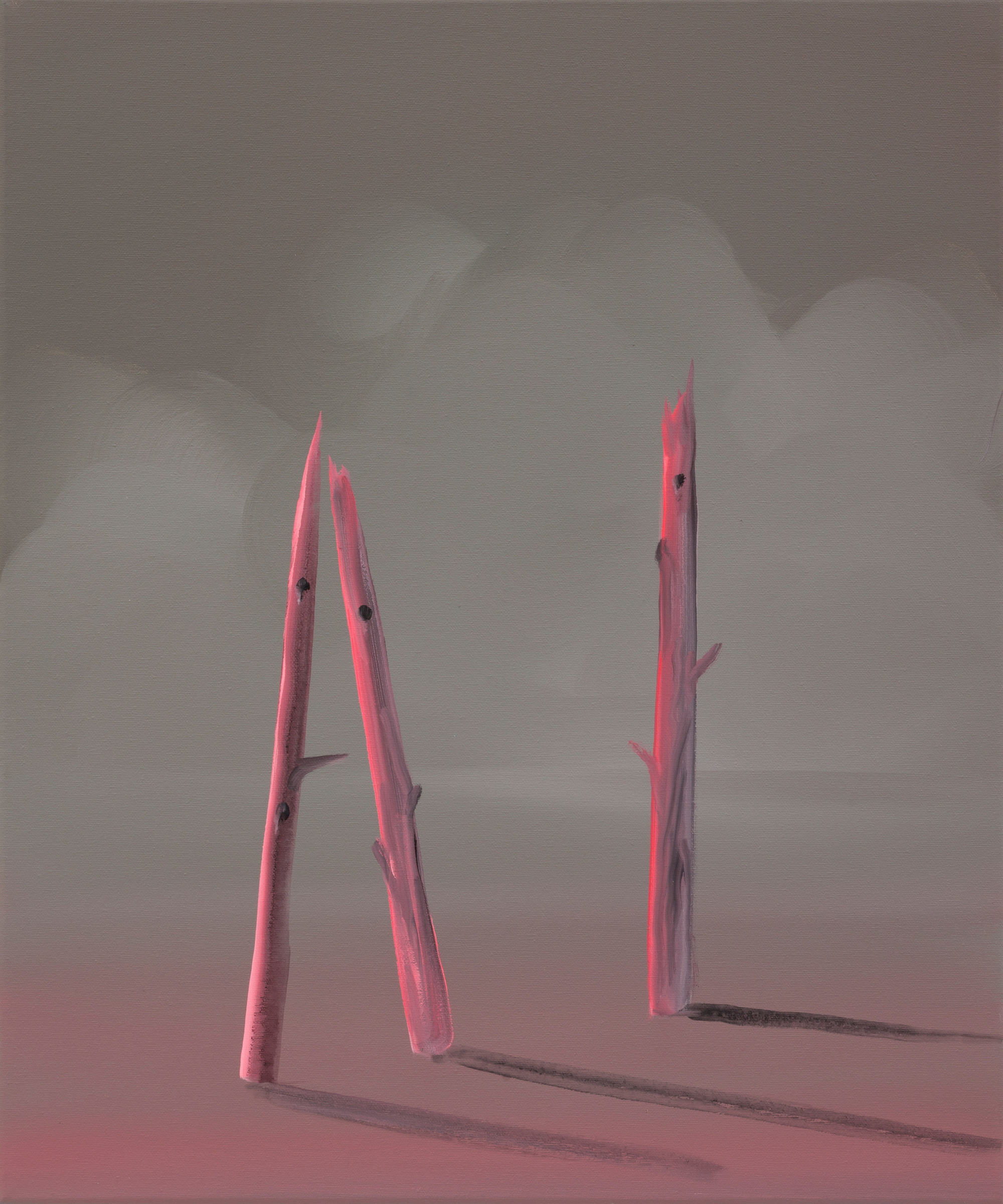
Ghost Tree AI (Grey Sky), 2024
Acrylic on canvas, 24 x 20 in
Continuing with the motif of landscapes, Wanda debuts her Ghost Tree AI paintings, where dead tree trunks unwittingly spell out the letters “AI.” This quietly tongue-in-cheek composition creates a clever visual pun that invites both reflection and a wry smile. In Solaris, lifeless trunks punctuate the riverine landscape, bearing witness to the fragility and incompleteness of life on Earth. Just as AI is structured to simulate understanding without truly experiencing, the ghost trees mirror our limitations when confronted with something fundamentally other, beyond our capacity to fully grasp or inhabit.
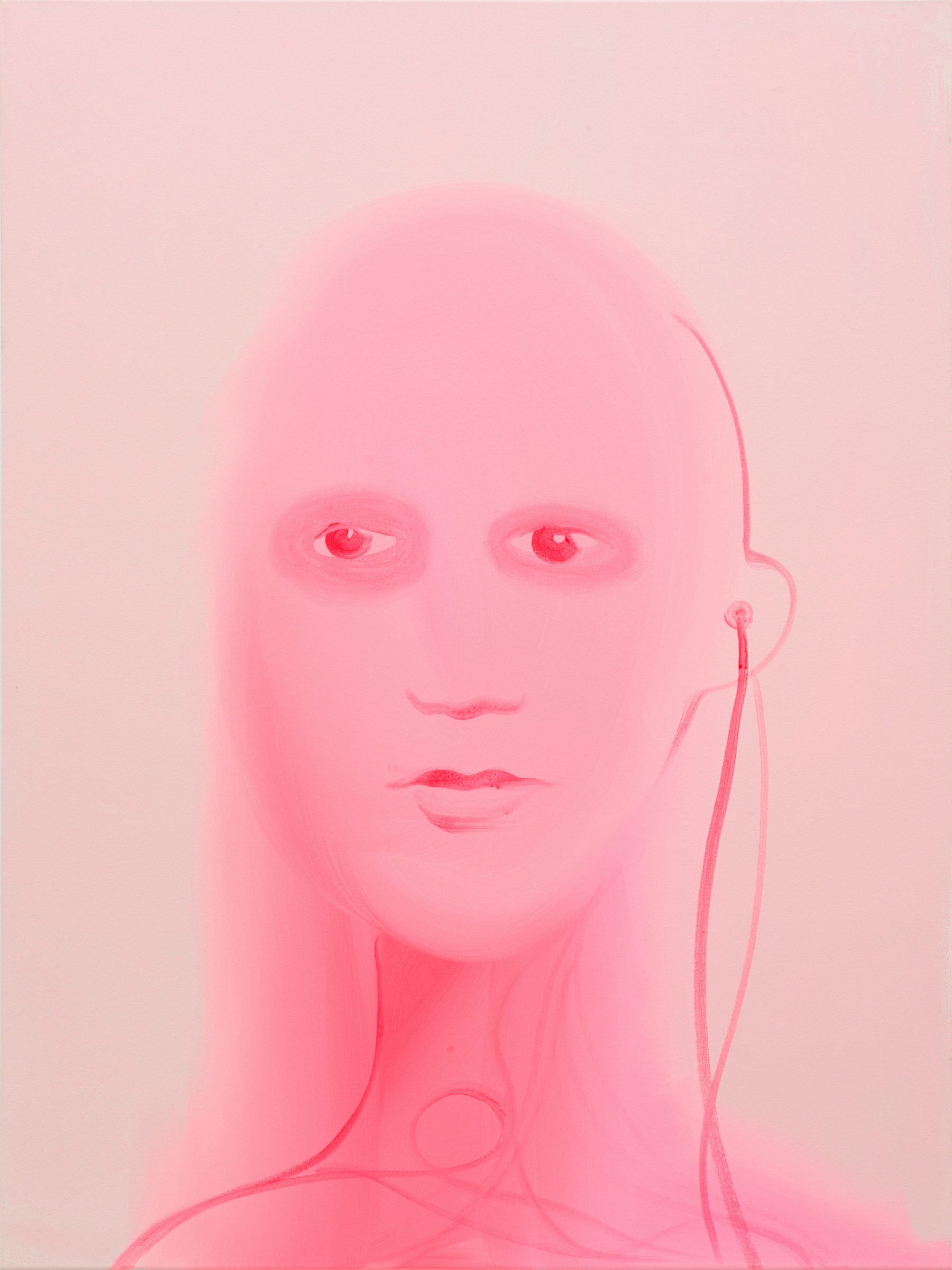
Createher Pink, 2024
Acrylic on canvas, 48 x 36 in
Closely tied to the AI theme is a robot painting called Createher Pink (2024). A visionary painter, Wanda’s engagement with AI and robotic imagery stretches back well over a decade, including her Face Time series. Gazing at this painting, I cannot help but think of Hari, the lead female character in Solaris, who is generated by the alien planet as a living replica of Kris Kelvin’s deceased wife, formed from how he remembers her. She is physical and tangible, yet not human—composed not of ordinary atoms, but of a neutrino-based substance, stabilized by Solaris’s invisible force: its magnetic field, which also happens to be the title of the current exhibition.
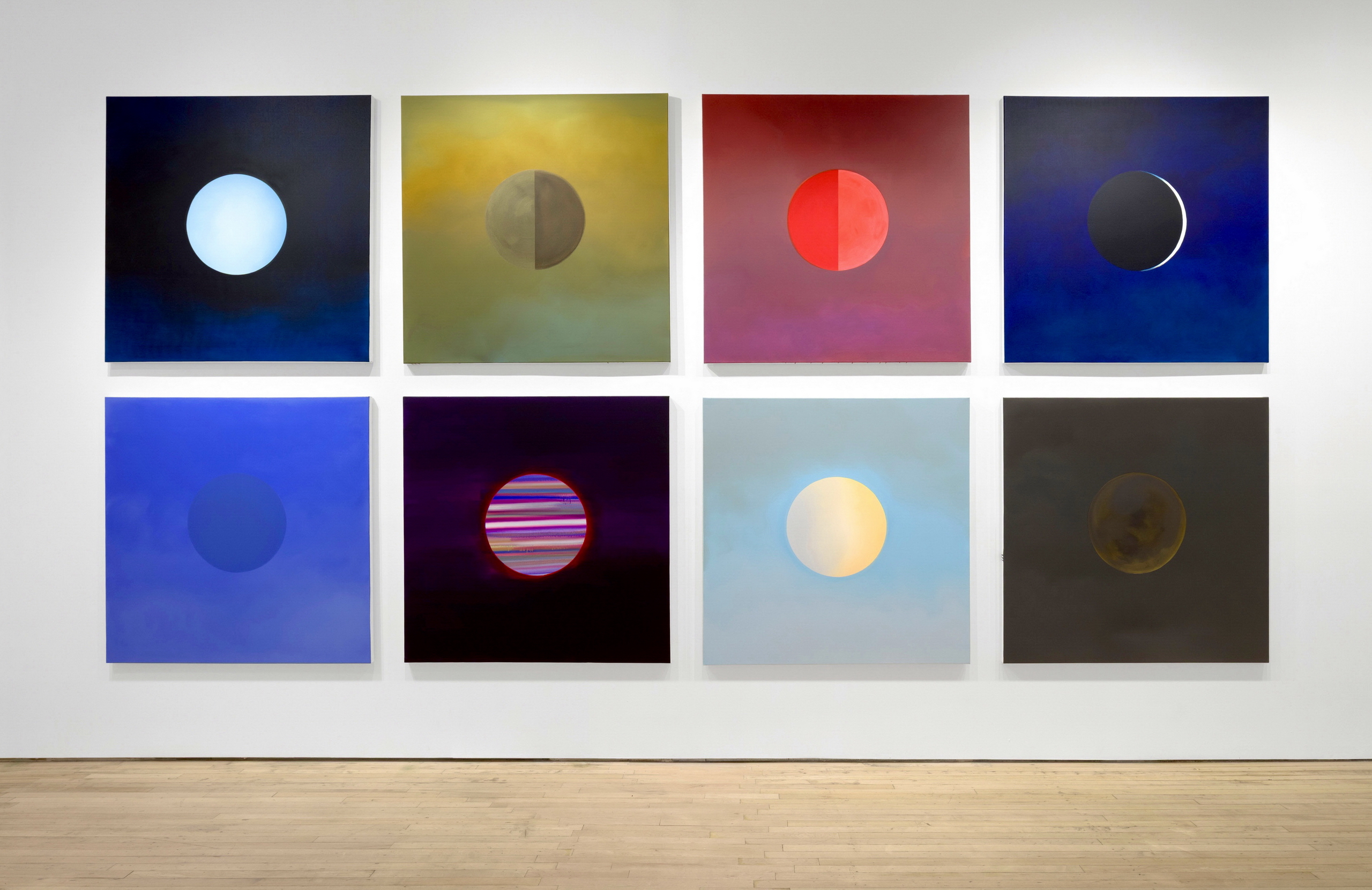
On the adjacent wall, eight more Moonwalk paintings are presented together, each a square canvas bearing the moon solemnly at its centre. Some lean toward the lifelike, dazzling in their beauty; others spring from the artist’s boundless imagination of celestial bodies and circular forms. Metallic pigments are occasionally infused, producing an astonishing visual effect. I feel they are no longer merely moons in the literal sense. Visually, they could be regarded entirely as abstractions. On a representational level, these pieces conjure realms of profound mystery: some evoke the imagery of the planet Solaris, with its vast, sentient ocean believed to possess high intelligence, and some, imbued with a futuristic quality, hint at portals or windows opening onto the unknown.
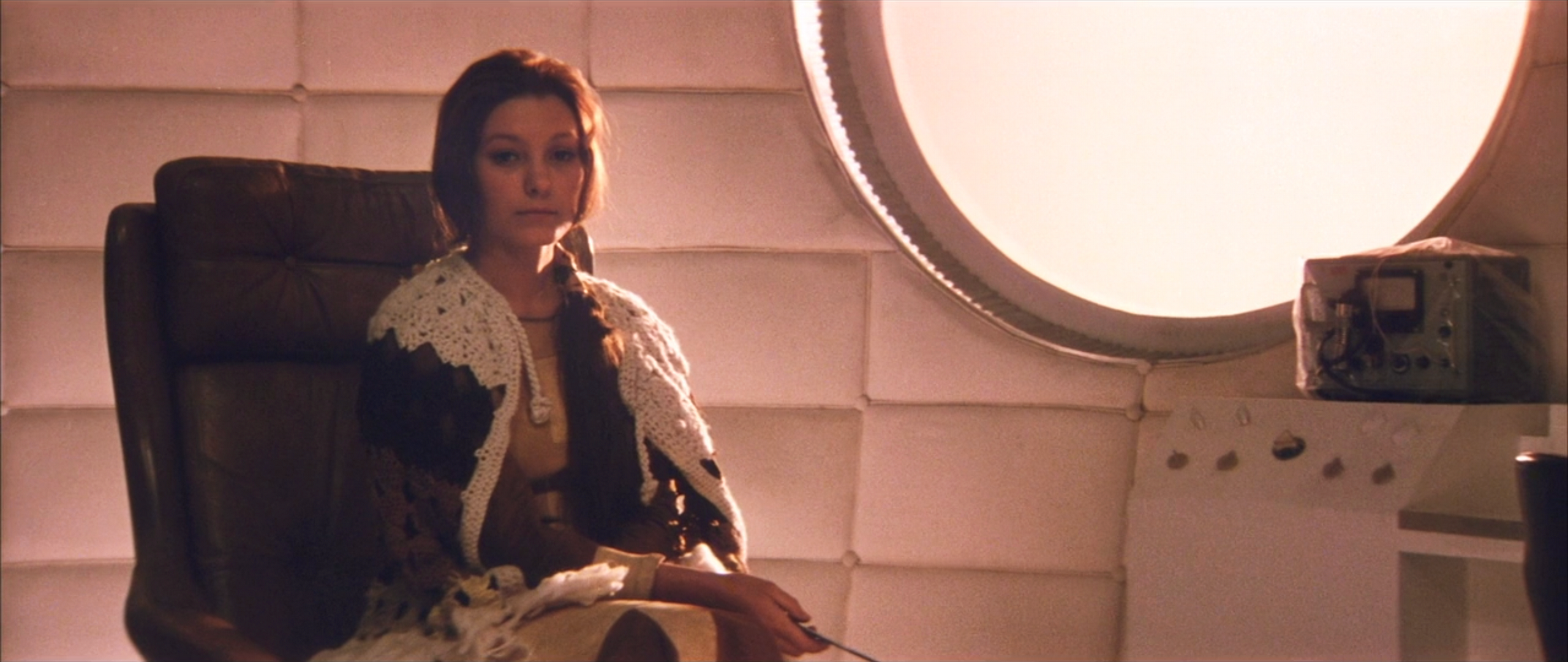
On the human space station orbiting Solaris, circular windows serve as a key visual element. Combined with Tarkovsky’s framing and his admiration for Rembrandt, these windows read almost as a nod to the Dutch master’s Self-Portrait with Two Circles (c. 1665–69). Hari and other so-called “visitors” mysteriously appear within the station—born from the deepest memories, desires, and regrets of the crew, as the ocean constantly scans and responds to the minds of those aboard. These beings are materializations of the suppressed subconscious. Though the station abounds with portholes opening to the infinite, the characters remain turned inward, confronting themselves, their pasts, and the limits of their understanding. The scenario unfolds in the spirit of self-portraiture—an intimate reflection of the self, laid bare and in dialogue with inner experience. In Wanda’s paintings, this meditation reaches its culmination in the symbolic presence of the moon, glowing with luminous centrality at the heart of her vision.
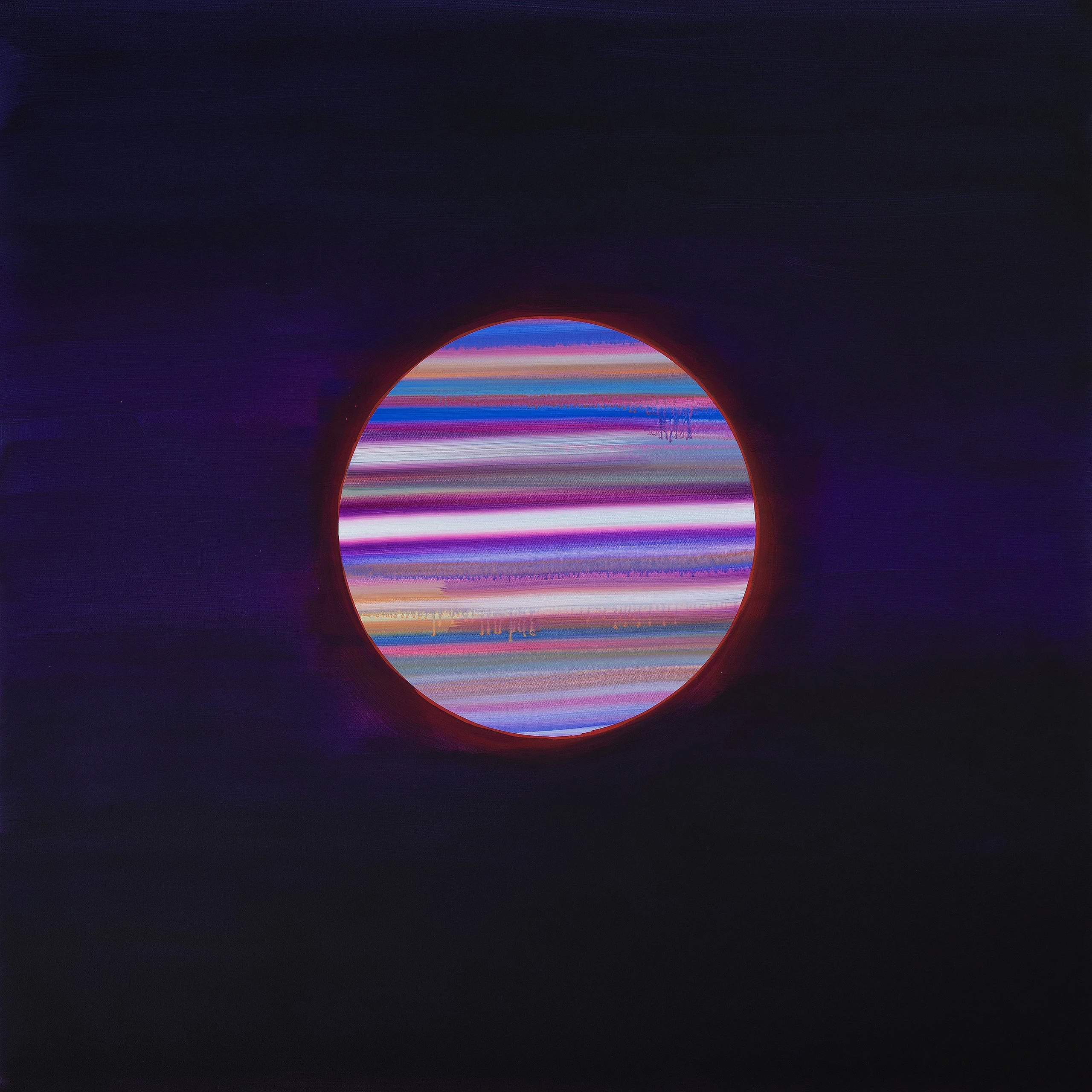
Moonwalk #7, 2024
Acrylic on canvas, 48 x 48 in
Thanks to ZHU Yilan for the inspiration, and Promise Xu for reading drafts of this essay.